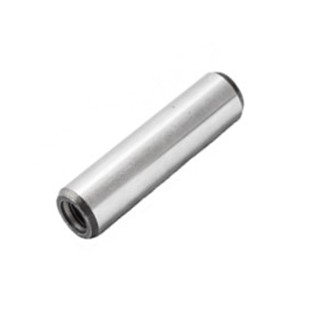
Hole New Precision: Mastering Extractable Dowel Pins
An extractable dowel pin (also known as a pull dowel pin) is a high-precision parallel positioning fastener featuring an internal metric thread engineered for rapid, non-destructive removal from blind holes. This user guide covers technical specifications, installation steps, and extraction procedures.
Step-by-Step Installation Guide
Proper installation prevents component damage and ensures the pin remains completely reusable.
- Prepare the Hole: Drill and ream the host hole to match the m6 tolerance requirements. Ensure the cavity is completely clean of metal chips, cutting fluid, and debris.
- Orient the Pin: Identify the side containing the internal thread. Always face the threaded end outward toward the open entry point of the hole.
- Apply Lubrication: Coat the pin lightly with high-pressure assembly paste or anti-seize lubricant. This minimises friction during installation and guards against future galvanic corrosion between dissimilar metals (e.g., steel pins in aluminium housings).
- Press Fit: Use an arbor press or a soft-faced dead-blow mallet to push the pin smoothly into place. Ensure the force is applied strictly inline with the axis of the pin to avoid bending or distorting the entry edge.
Step-by-Step Extraction Guide
The defining benefit of an extractable dowel is its simple, inline removal process that preserves the surrounding precision-machined mating surfaces.
Method 1: Using a Slide Hammer (Best Practice)
This is the fastest, safest industrial standard method for tightly seated or frozen pins.
- Match the Thread: Select a slide hammer adapter attachment that matches the internal metric thread of the pin.
- Thread Tight: Screw the tool adapter securely into the top of the pin. Ensure a generous thread engagement to avoid stripping out the internal walls.
- Drive Out: Hold the slide hammer completely straight. Slide the weights firmly against the upper stop in a sharp, fluid motion until the pin releases.