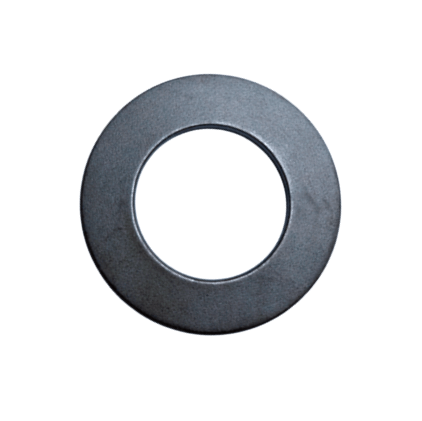
Ultimate Guide to Preload Disc Springs: Enhancing Bearing Longevity
Preload disc springs are specialized, conically-shaped washers designed to apply a continuous axial force to bearings and mechanical assemblies. By maintaining constant tension, these components take up internal clearance, eliminate play, and significantly reduce noise and vibration.
Here is everything you need to know about how preload disc springs optimize mechanical systems.
💡 Why Bearing Preload Matters
In rotating machinery, ball bearings require a specific amount of tension to operate efficiently. Without proper preloading, ball bearings experience several mechanical issues:
- Mismatched Rotation: Balls slide or skid instead of rolling properly, causing rapid wear.
- Axial Play: Unwanted movement along the shaft damages precision.
- Resonance: Excessive vibration shortens the lifespan of surrounding components.
Preload disc springs solve this by maintaining a constant, predictable load that keeps the rolling elements firmly seated in their raceways.
⚙️ Key Technical Benefits
- Compensates for Thermal Expansion: As operating temperatures rise, shafts expand. Disc springs flex to absorb this dimensional change without overloading the bearing.
- High Force in Compact Spaces: Unlike standard coil springs, disc springs generate massive axial force while occupying minimal linear space.
- Configurable Performance: You can stack disc springs in different arrangements to modify performance:
- In Series (Opposing directions): Increases total deflection (travel) while keeping the force the same as a single spring.
- In Parallel (Same direction): Increases total force while keeping deflection the same as a single spring.
🛠️ Common Industrial Applications
Preload disc springs are essential components across high-precision and heavy-duty industries:
- Electric Motors: Minimizes rotor shaft float and reduces operational noise.
- Machine Tool Spindles: Ensures extreme axial rigidity for precise cutting and milling.
- Automotive Drivetrains: Maintains clutch and transmission alignment under variable loads.
- Pumps and Compressors: Absorbs axial thrust forces generated by high-velocity fluids.